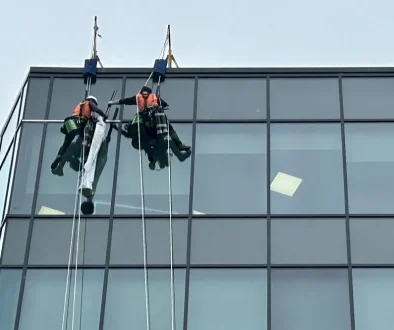
Access & rescue verification – Combustible dust removal
Bulk Grain Handling Facility, South East UK.
Evolve Rope Access Ltd was engaged by a major bulk grain handling facility in the South East of the UK to carry out complex confined space cleaning works. The scope was undertaken as additional works for an existing client, building on a previously established working relationship and understanding of the facility.
The project formed part of the client’s wider programme to reduce fire and explosion risk and to meet their responsibilities under the Dangerous Substances and Explosive Atmospheres Regulations (DSEAR) 2002.
Services required:
Overview:
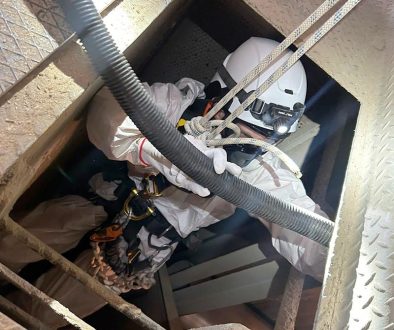
The work involved the controlled removal of combustible dust from complex confined spaces that had historically not been accessed. Prior to Evolve’s involvement, there were no established access, egress or rescue arrangements in place for these spaces.
Before any cleaning could be carried out, it was essential to develop and verify safe, workable access and rescue methodologies appropriate to the structure, work scope and operating environment. Credit is due to the client for recognising the importance of this preparatory phase and supporting a standards-led approach to managing these high-risk spaces.
Challenges:
-
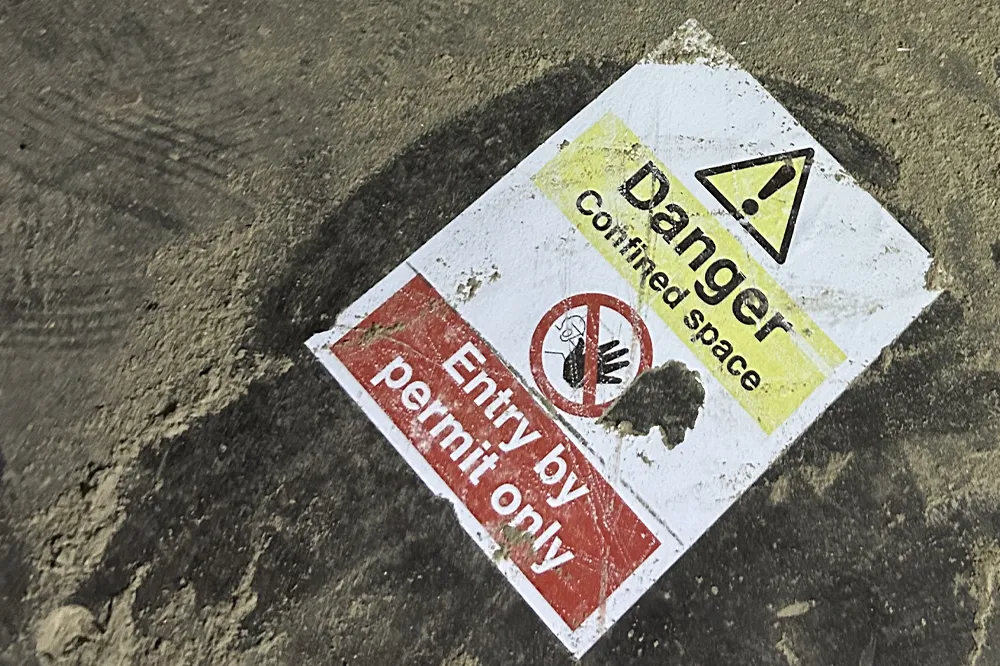
Confined Space Entry: Restricted entry points, limited internal space and work at height within the confined environment required careful planning, specialist knowledge and clearly defined access and egress arrangements.
-
Potentially Explosive Atmosphere: The presence of combustible dust created a potentially explosive atmosphere, requiring strict compliance with DSEAR 2002. This influenced equipment selection, PPE, working methods and control measures throughout the project.
-
Access, Egress and Rescue: As this was the first planned entry into these spaces, there were no existing rescue arrangements. Developing and proving practical, site-specific rescue methodologies was a prerequisite to carrying out the dust removal works.
Our Approach:
Following a detailed site visit and planning meetings with the client, Evolve developed a comprehensive strategy tailored to the specific hazards, work scope and operational constraints of the facility.
This was the first planned entry into these confined spaces, and no historic access, egress or rescue arrangements existed. Access and rescue planning was approached incrementally, and practically verified on a level-by-level basis, before progressing further into each of the four spaces. This ensured that rescue methods remained achievable and appropriate at each stage of entry.
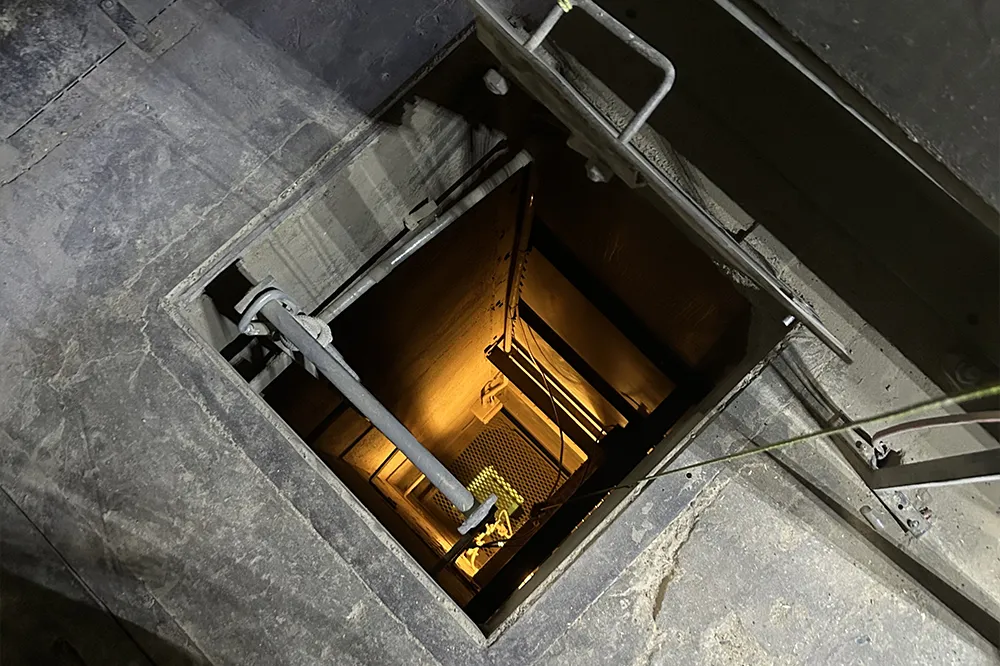
Four vertical shafts, each 45 metres in depth, incorporating vertical ladder access and horizontal walkways at multiple levels were safely accessed.
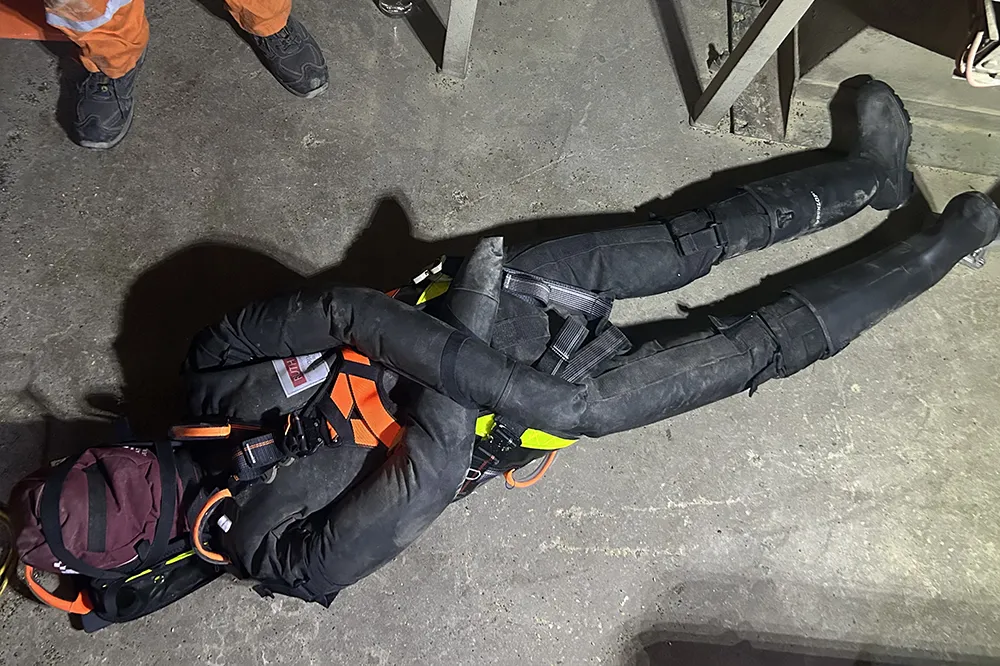
A key consideration in the rescue strategy was the extremely limited space at the transition points between the vertical ladders and horizontal walkways. These constraints meant that conventional full-length rescue stretchers were not viable for casualty extraction.
Evolve specified and sourced a Skylotec Conrest Kit rescue stretcher, a half-length stretcher designed for confined environments. The Conrest system provides stabilisation of the pelvis, back and neck while allowing controlled movement through tight areas. This equipment selection was essential to demonstrating that casualty rescue could be carried out safely and practically from all levels of the structure.
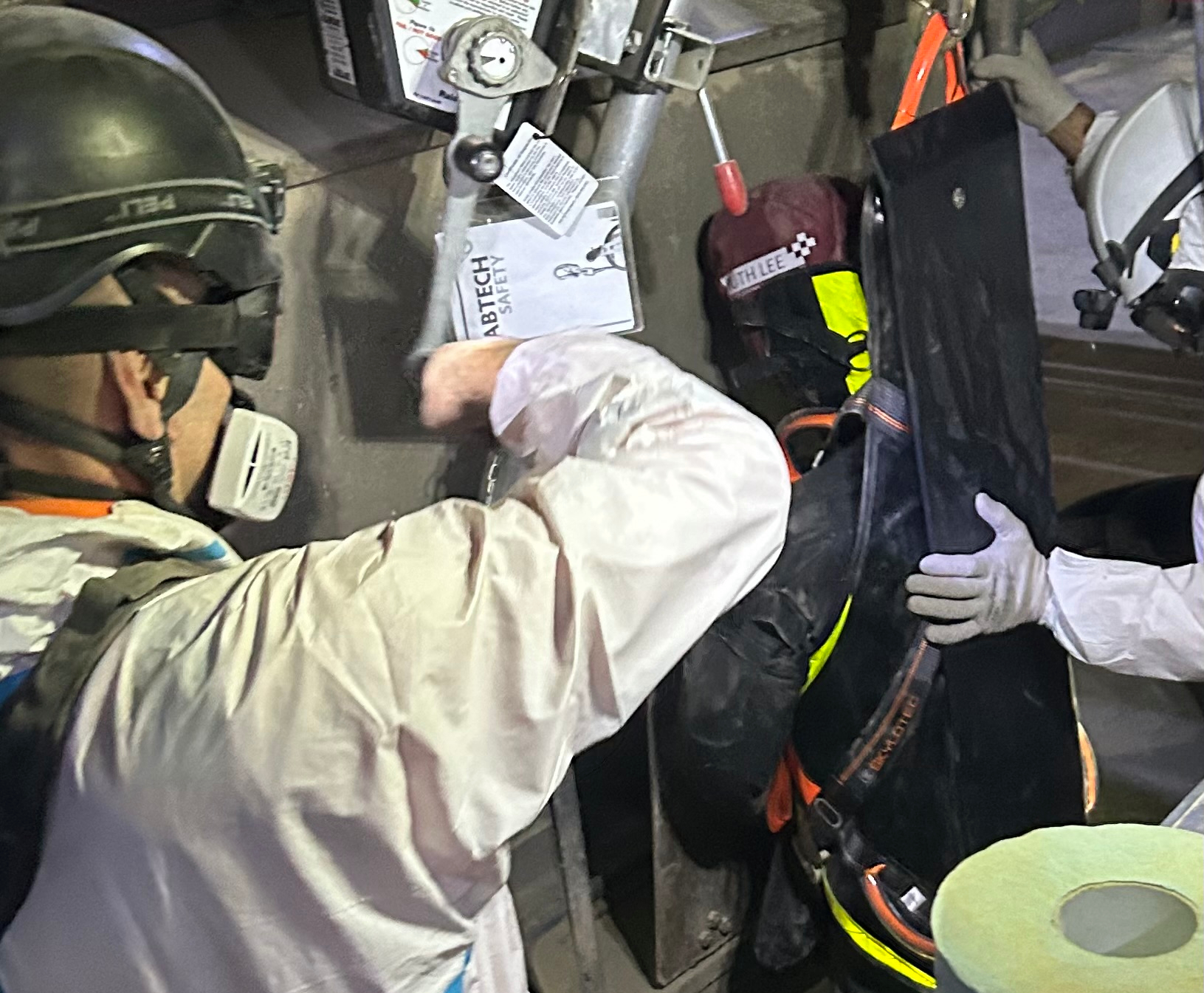
A City & Guilds certified high-risk confined space rope access team was deployed, operating under active supervision and supported by Evolve’s management team throughout the project.
Key elements of the approach included:
-
A robust method statement and risk assessment addressing confined space hazards, dangerous atmospheres and emergency scenarios
-
Incremental development and verification of access, egress and rescue arrangements at each level of entry
-
Specification and use of specialist rescue equipment suitable for restricted internal geometries
-
Strict adherence to confined space entry procedures, including permit-to-work systems, communications protocols and continuous atmospheric monitoring
This structured, progressive approach ensured that risk was managed proportionately and that access and rescue arrangements remained viable throughout the works.
Outcome:
Safe access and rescue methods were successfully established, allowing the combustible dust removal to be carried out in a controlled and compliant manner.
The project was delivered without incident and without disruption to wider site operations. The client gained assurance that these confined spaces can now be accessed safely, and managed to an appropriate standard.
Benefits:
 Improved safety and compliance
The works supported the client’s duties under the Confined Spaces Regulations 1997 and the Dangerous Substances and Explosive Atmospheres Regulations 2002 (DSEAR), with effective control of combustible dust hazards throughout.
 Raised standards
Practical access, egress and rescue methodologies were developed where none had previously existed, including the specification of rescue equipment appropriate to the physical constraints of the spaces.
Specialist deliveryEvolve delivered a complex, hazardous scope requiring careful judgement, structured planning and competent execution, demonstrating the value of experienced confined space rope access teams.
Foundation for future worksThe project established a basis for future inspection, cleaning, and maintenance activities within these confined spaces.
Book your site visit
Pre-start site visits enable us to understand the work scope, and ensure hazards and risk associated with the work, structure, and operating environment are properly understood and controlled.
Pre-start assessments typically include:
-
Site-specific hazard identification: Identification and management of hazards associated with the work scope, structure, environment and surrounding activities.
-
Anchor point assessment: Review of available anchor points and provision of temporary anchor arrangements where required.
-
Debris and dropped-object risk management: Assessment of potential debris risks and implementation of appropriate control measures.
-
Environmental factor assessment: Consideration of weather, process conditions and other site-specific influences on safe delivery.
-
Rescue planning and verification: Confirmation that practical, site-specific rescue arrangements can be developed and implemented.
-
Third-party protection: Measures to protect other personnel, occupants and the public during works.