
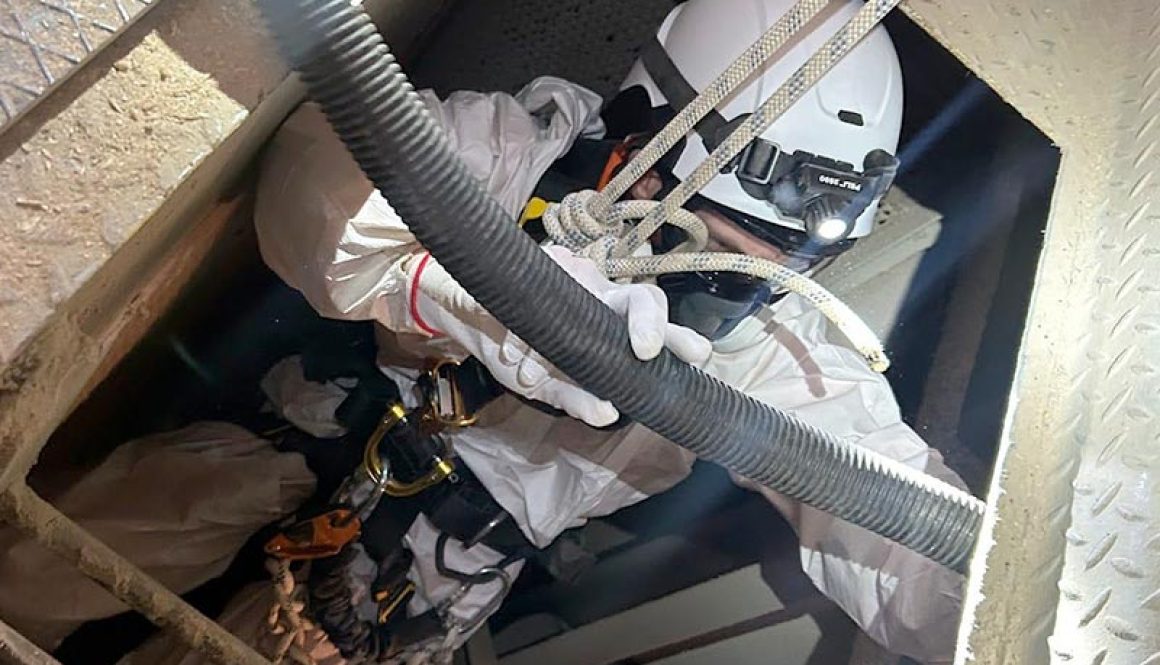
Bulk Grain Handling Facility, London
Confined Space Cleaning & Maintenance
Bulk Grain Handling Facility, London
Evolve Rope Access Ltd was engaged by a major bulk grain handling company in London to carry out complex confined space cleaning and maintenance operations within a key facility.
Services required:
Overview:
The work involved the safe removal of combustible dust, essential maintenance to internal plant structures, and the creation of a detailed condition report — critical for maintaining safety, compliance, and operational reliability. Previous contractors had failed to present a suitably robust plan for this hazardous work-scope.
Challenges:
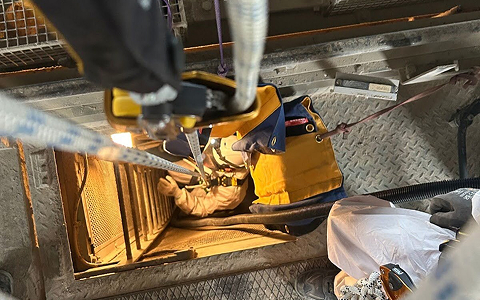
Confined Space Entry: Limited access points and the hazardous nature of the location and task required careful planning, specialist equipment and knowledge, and in-built rescue capability.
Potentially Explosive Atmosphere: The presence of combustible dust required strict compliance with the Dangerous Substances and Explosive Atmosphere Regulations (DSEAR 2002). This included the use of ATEX Zone rated equipment, static-dissipative PPE, and respiratory protection.
Operational Sensitivity: Work had to be conducted safely, efficiently, and without disrupting wider site operations.
Our Approach:
Following an in-depth site visit and collaborative planning session with the client, Evolve developed a comprehensive strategy tailored to the specific hazards and operational constraints of the environment.
This included a focus on safe systems of work, detailed risk control measures, and contingency planning.
We deployed a highly competent confined space rope access team, trained to operate in hazardous and regulated environments. The team was supported by a dedicated rescue plan, overseen by an experienced on-site supervisor, and backed by our off-site management team.
A robust Method Statement and Risk Assessment (RAMS) pack addressing confined space hazards, explosive atmospheres, and emergency scenarios.
Use of ATEX-rated lighting, tools, and communications equipment—all certified for use in potentially explosive atmospheres.
Specialist PPE, including anti-static, flame-resistant clothing, full respiratory protection, and confined space harness systems.
Deployment of a portable EN795 A-frame anchor system to ensure compliant access and egress, and facilitate rescue if required.Strict adherence to confined space entry procedures, including continuous gas monitoring, communications protocols, and permit-to-work systems.
The cleaning, inspection, and reporting were delivered using advanced rope access techniques, allowing safe, efficient navigation of the internal plant structure with minimal disruption to site operations.
Outcome:
Evolve successfully delivered the full scope of work safely, on schedule, and without disruption to wider site operations. Our planning, specialist team, and methodical execution ensured zero incidents, no delays, and full compliance with all regulatory requirements.
A comprehensive post-project report was provided, including photographic evidence, detailed findings, and recommendations for further action — giving the client assurance, clear documentation, and confidence in the safety and integrity of the plant moving forward.
Benefits and Savings:
 Enhanced Safety
Evolve maintained strict compliance with the Work at Height Regulations 2005, the Confined Spaces Regulations 1997, and the Dangerous Substances and Explosive Atmospheres Regulations 2002 (DSEAR). Continuous atmospheric monitoring and robust safety controls were in place throughout the operation.
 Proven Expertise
Evolve successfully delivered the project where previous attempts had been unsuccessful, demonstrating the effectiveness of rope access techniques in complex, confined environments.
 Cost Efficiency
Rope access eliminated the need for costly scaffolding and plant, reducing project costs and providing the client with a faster, more agile solution.
 Reduced Downtime
Accurate high-level inspections, safety checks, and condition assessments of difficult-to-access structures.
Book your site visit
Pre-start site visits enable us to understand the work scope, and ensure hazards and risk associated with the work, structure, and operating environment are properly understood and controlled.
Pre-start assessments typically include:
-
Site-specific hazard identification: Identification and management of hazards associated with the work scope, structure, environment and surrounding activities.
-
Anchor point assessment: Review of available anchor points and provision of temporary anchor arrangements where required.
-
Debris and dropped-object risk management: Assessment of potential debris risks and implementation of appropriate control measures.
-
Environmental factor assessment: Consideration of weather, process conditions and other site-specific influences on safe delivery.
-
Rescue planning and verification: Confirmation that practical, site-specific rescue arrangements can be developed and implemented.
-
Third-party protection: Measures to protect other personnel, occupants and the public during works.