Curtain wall leak detection & rectification
Commercial building, Sheffield.
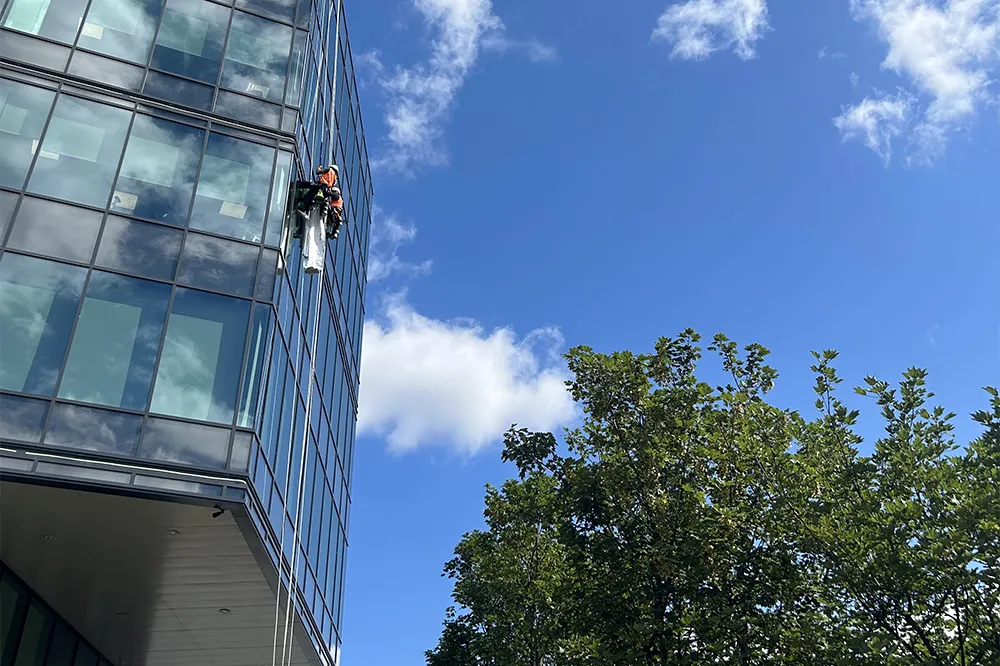
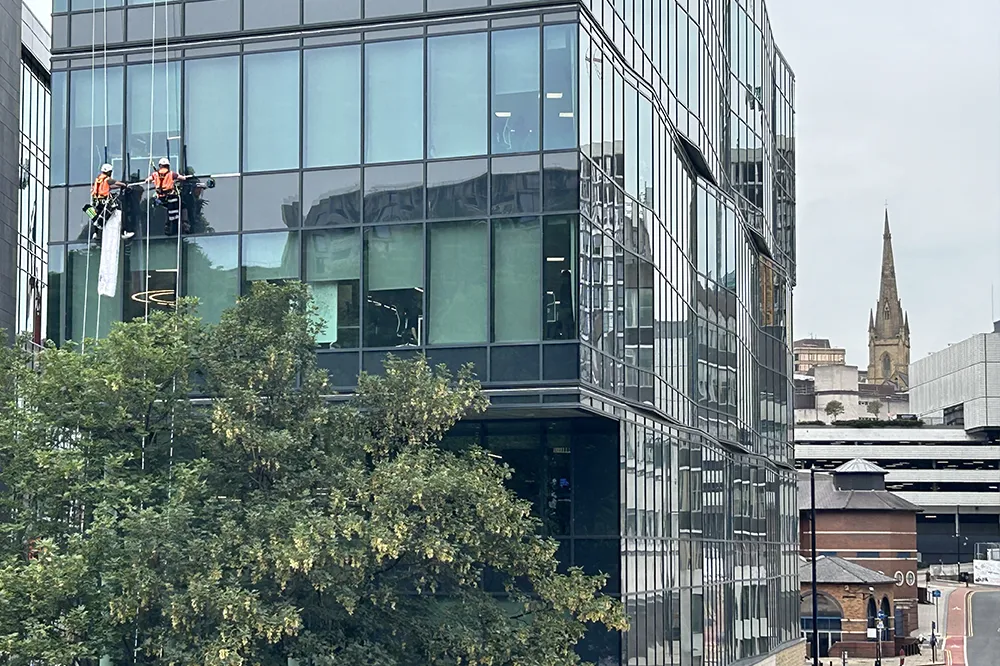
Evolve Rope Access Ltd was engaged to deliver a programme of curtain wall leak detection and rectification on a commercial building in Sheffield. The works were undertaken following the client’s decision to appoint a new contractor, driven by a requirement for greater assurance around access planning, public protection and delivery control.
The project formed part of an ongoing programme to maintain building performance and protect the integrity of the external envelope.
Services required:
Overview:
The project involved close inspection of the curtain wall system to identify sources of water ingress, followed by targeted remedial works to address defects. The building remained fully operational throughout, with significant pedestrian movement at ground level.
Safe access to the façade was a primary challenge, with limited load capacity at roof level and no existing anchor points suitable for rope access. A solution was required that allowed works to proceed safely while providing the client with confidence in how risk was being managed.
Challenges:
-
Limited Anchors: There were no existing in-situ anchor points, and insufficient steelwork available to rig conventional rope access systems.
-
Low Roof Load Capacity: Roof load limits restricted the use of standard access and deadweight systems, requiring careful assessment and alternative solutions.
-
Public Interface: The building frontage was subject to high volumes of pedestrian traffic, requiring robust measures to protect the public and manage dropped-object risk throughout the works.
Our Approach:
Following a detailed site assessment and planning discussions with the client’s engineering team, Evolve developed an access and protection strategy tailored to the constraints of the structure and its surroundings.
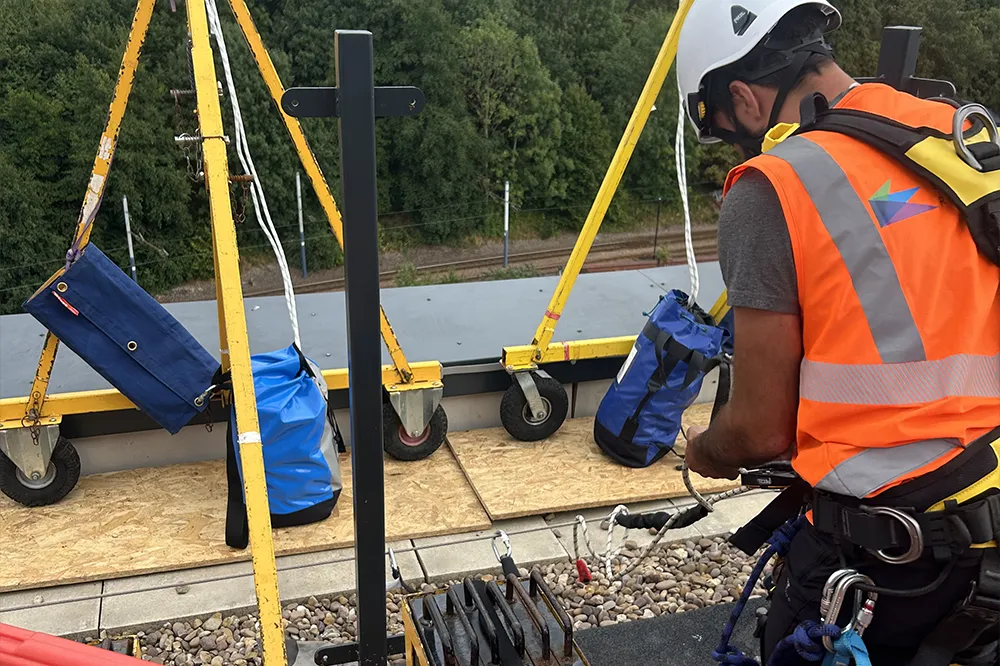
Where roof loading permitted, A-frame counterbalance anchor systems were selected to provide compliant access without imposing excessive loads. In areas where roof load capacity was insufficient, a ground-based deadweight anchoring system was designed and deployed to support safe access.
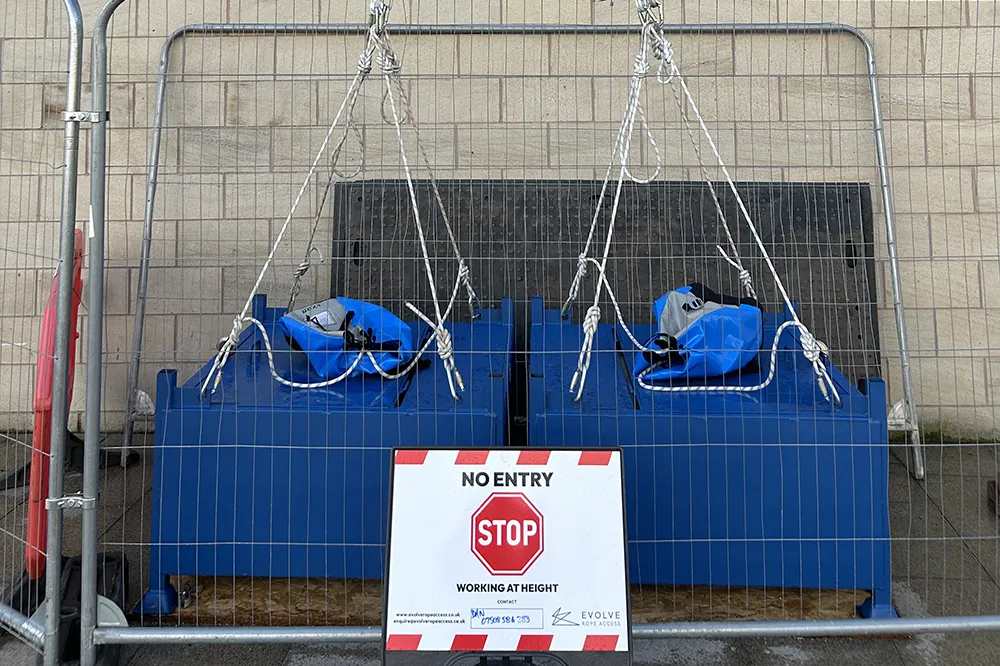
Public protection was treated as a core element of the planning process. Clearly defined exclusion zones and robust barrier systems were installed and maintained for the duration of the works to ensure pedestrians were kept safely clear of the working area at all times.
To control dropped-object risk, tool and device tethering systems were used throughout, providing continuous secondary retention without impeding productivity. Delivery included:
-
Site-specific access design aligned with structural load limitations
-
Selection and deployment of appropriate counterbalance and deadweight anchor systems
-
Installation and maintenance of pedestrian protection measures
-
Dropped-object prevention through tethered tools and devices
-
Live reporting to the client’s engineers as inspections and remedial works progressed
Outcome:
The inspection, leak detection and rectification works were completed safely and in accordance with the agreed programme.
Live reporting provided the client’s engineering team with clear, timely information, allowing defects to be confirmed, prioritised and addressed efficiently. The programme was completed on schedule, without incident, and without disruption to building users or the public.
Benefits:
 Improved Assurance
The client gained confidence in how access, public protection and risk were being managed through structured planning and clear communication.
 Safe Access Without Structural Compromise
Appropriate access solutions were developed despite the absence of anchor points and low roof load limits.
Effective Public ProtectionClear segregation and barrier systems ensured pedestrian safety throughout a high-traffic environment.
Controlled DeliveryDropped-object risks were effectively managed through tethering systems, maintaining safety without slowing progress.
Book your site visit
Pre-start site visits enable us to understand the work scope, and ensure hazards and risk associated with the work, structure, and operating environment are properly understood and controlled.
Pre-start assessments typically include:
-
Site-specific hazard identification: Identification and management of hazards associated with the work scope, structure, environment and surrounding activities.
-
Anchor point assessment: Review of available anchor points and provision of temporary anchor arrangements where required.
-
Debris and dropped-object risk management: Assessment of potential debris risks and implementation of appropriate control measures.
-
Environmental factor assessment: Consideration of weather, process conditions and other site-specific influences on safe delivery.
-
Rescue planning and verification: Confirmation that practical, site-specific rescue arrangements can be developed and implemented.
-
Third-party protection: Measures to protect other personnel, occupants and the public during works.